Services
Website Development
Content-Rich Websites
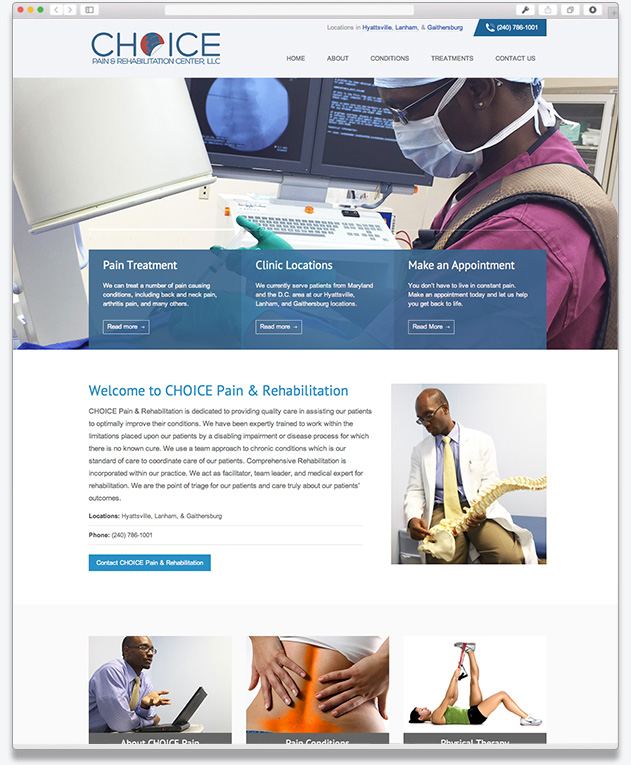
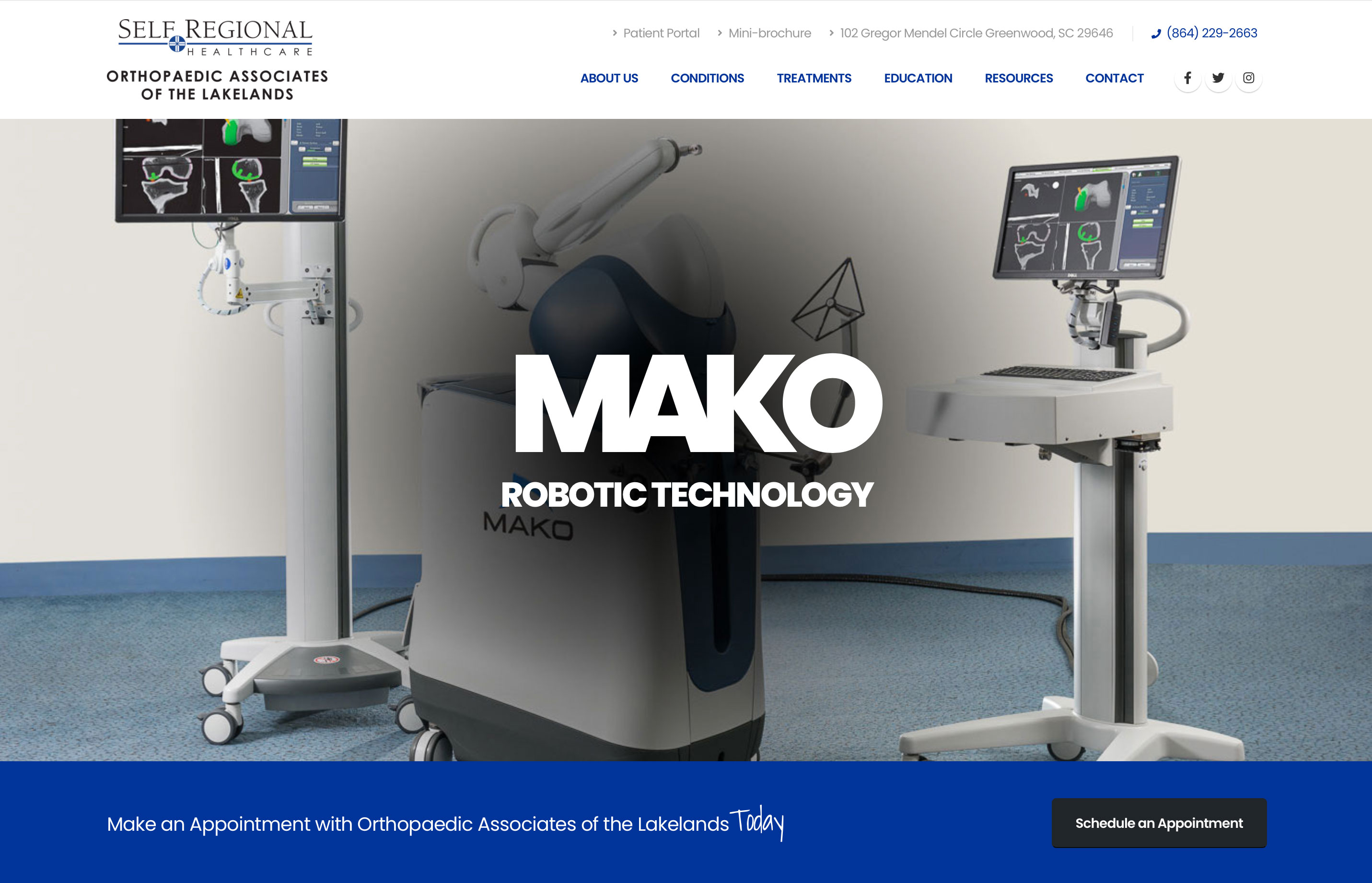
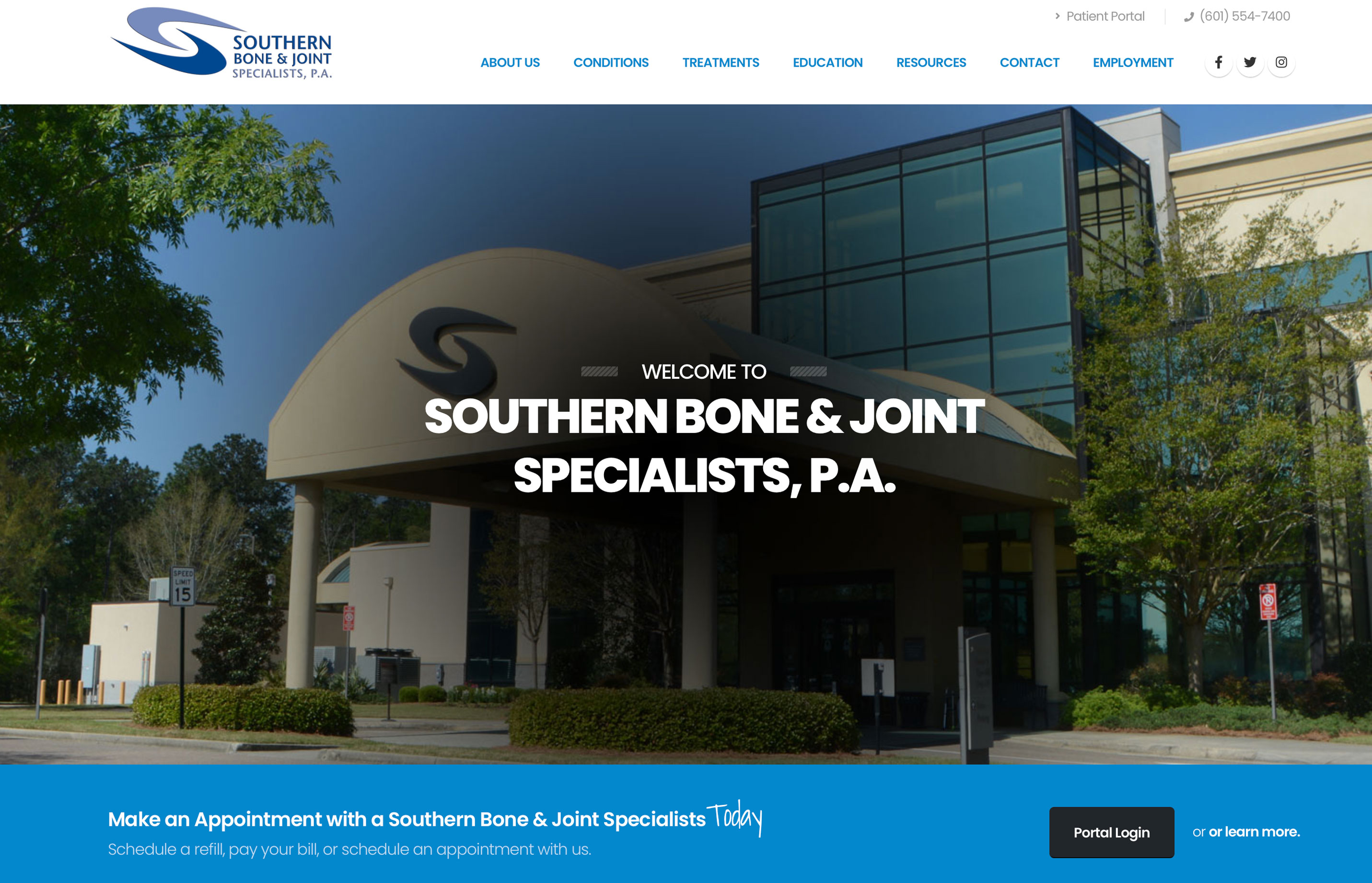
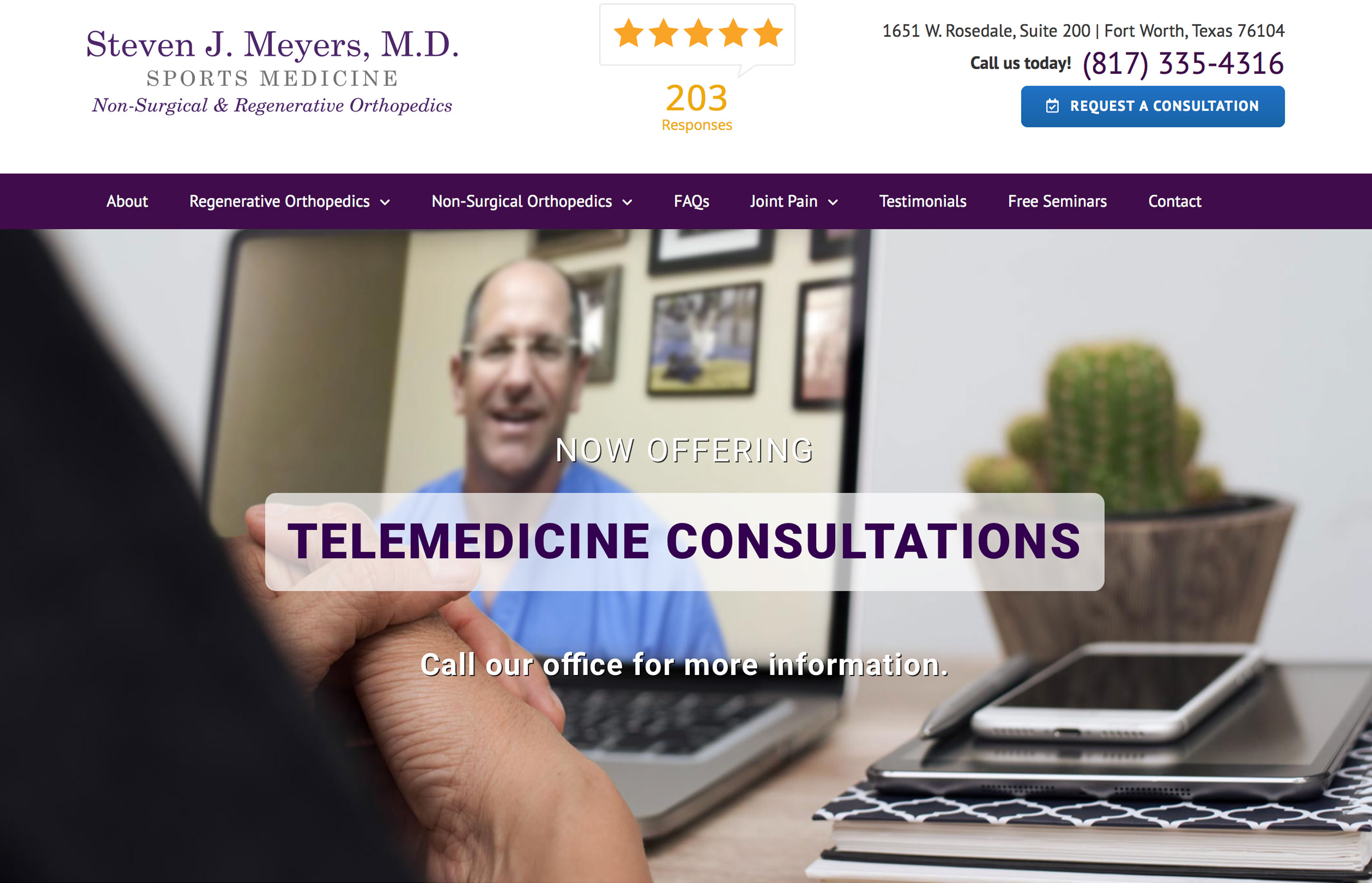
If you do not have a presence on the Internet, you essentially do not exist to a majority of your target customer base. Without an Internet presence, your brand has an inherent weakness that will limit your success. However, websites for Healthcare providers must follow a vastly different strategy than the websites for other industries. Done improperly, for example, the healthcare provider can appear foolish at the hands of a general ad agency or web developer. For one, healthcare is a considered purchase. Two, someone in pain is less receptive to certain design features that, while interesting and "cool" to look at, can cause frustration and may even portray the healthcare provider as being insensitive to their current health care problem.
Creating a healthcare website is a specialized communication task requiring sensitivity to those who are seeking information about a health care problem, whether that be cancer, back pain, knee pain or male health problems. These people want well-researched answers to their medical concerns and questions, something a general ad agency is unable to provide. Physician Practice Online specializes ONLY in healthcare websites. Our experience and expertise in healthcare spans multiple decades and we have proven to our clients that our website development strategies are effective for patient generation and referral development.
What are the benefits for a doctor to have a personal web site?
Many physicians would be surprised that a personal web site can attract more patients, and especially patients who have desirable insurance that can increase their reimbursement and collections.
But they often wonder, how can a specialist or surgeon differentiate his practice with a personal web site when employed by a hospital or within a large group practice?
Actually specialists can benefit greatly from a personal web site because the healthcare consumer can self diagnose many health problems, like a knee problem, a hip problem, ankle problem or even things like hernia and breast lumps. They don’t need a family practice doctor appointment to then pursue a specialist.
Within a large orthopedic group, for example, while there may be a few internal cross referrals from the orthopedic physicians, those referrals and patients are typically divided among all the surgeons in the group.
A similar marketing problem exists for physicians who are employed by hospitals. Many hospitals don’t promote the reputation or capabilities of a single doctor. Instead many hospitals just promote the name of a hospital department hoping consumers will call a general number to be “assigned an appointment” by the hospital scheduling team. Educated consumers, which are the most desirable with the best healthcare insurance, are past the point of being herded through hospital call centers and clerks.
Similarly most hospital web sites rarely feature specialists by name or showcase their fellowships and specialty capabilities. The hospital typically has a physician bio page and it’s left to the consumer to select a spine surgeon simply from a limited physician bio. Hospital web sites do not differentiate the surgeon from a sea of competitors — especially in a major market. It’s politically explosive for a hospital to favor one specialist over another.
Why hospital employment hobbles surgeon productivity
When a surgeon is employed by a hospital, that doesn’t typically represent an increase in primary care referrals from the captive PCPs employed by the hospital.
In fact, being affiliated with one campus can polarize other non-campus primary care physicians away from that surgeon, for fear that patients referred by the PCP into a competitive hospital campus will not come back to the referring doctor for ongoing primary care.
Consequently, the surgeon often experiences an anemic practice that operates well below their capacity which in turn affects their productivity and compensation because they fall short of the established lofty RVU productivity targets.
Also from a professional standpoint, the surgeon is often receiving the type of cases they don’t find intellectually stimulating. If they prefer complex cases, they often aren’t positioned as a regional expert to receive such referrals from a wide geographic area.
So in reality, with hospital employment and membership within a large group practice, the surgeon’s compensation is dependent upon their personal productivity and surgical caseload. In this scenario it can be difficult for the surgeon to differentiate themselves and attract patients directly to their spine practice.
Physician Practice Online developd personal web sites for surgeons and specialists who are either self-employed or employed by a hospital or a member of a large group practice.
The Physician Practice Online educational content installed into the personal web site enables the specialist to appear in on the first page of Google for queries specific to spine care and their city or region. Hospital web sites and large groups rarely appear on the first page of Google for specific consumer queries.
Physician Practice Online creates a personal web site for the specialist or surgeon that enables them to score in the top 10 on Google and other search engines for consumer questions and queries that are specific to symptoms.
The second issue affecting physicians and specialists who are employed is that they are dependent on the PCP “middleman distributor" for their patients.
This creates several problems for the surgeon:
First, many primary care physicians in large markets are now employed by hospital systems. In many cases, these employed PCPs can have a financial incentive to refer to their hospital campus specialists ... no different than how a retail distributor is influenced.
Second, consumers are using the Internet to bypass PCPs and direct themselves to the best super-specialists and regional centers, especially when they have a health issue that can be self-diagnosed (e.g. back pain, hernia, joint pain, eye problem, cosmetic surgery issue, breast lump etc.)
Physician Practice Online can help specialists keep existing referral streams and develop new referral sources from an expanded geographic market. That’s because an educated patient WILL travel out of a secondary market for the best specialist.
Physician Practice Online’s physician marketing includes “direct-to-consumer” strategies with promotion that enables patients to bypass captive PCP networks and seek out advanced specialists. The pre-surgical patient then is connected directly to the right specialist for their particular symptom set. This is accomplished with the highly educational personal Internet presence, and many social media communication options.
With Physician Practice Online’s approach to surgeon marketing EVERYBODY wins:
1. The educated patient WINS because they are connected to the best surgeon for their problem and will have a better clinical outcome, instead of being sorted by a hospital clerk based on a simplistic sorting protocol that doles out patients randomly without any connection of symptom set to spine specialist.
2. The surgeon WINS because they are getting patients that relate to their area of expertise. They do MORE cases in that spine niche and consequently their outcomes improve with volume.
3. The hospital WINS by capturing more surgical cases.
A personal web site is the most economical promotion strategy
The Internet has been growing exponentially, mainly because it is by far the most economical way to communicate with customers and prospects.
Unlike newspaper ads, direct mail promotions, brochures, TV or radio – all of which target local geographic zip codes – the Internet provides an economical way to communicate with a universe of prospects that isn't limited geographically. An educational Internet site can reach people down the street or in Hong Kong.
Secondly, while brochures on paper become dated quickly, an electronic brochure on the Internet can be updated within minutes and at little expense.
Why you need a company that is 100% specialized in healthcare
Done improperly, the healthcare provider can appear foolish at the hands of a general ad agency or propeller-head website company. That's because working with healthcare is not even remotely like other industries.
For one, healthcare is a “considered purchase”. Creating a healthcare Web site is a specialized communication task requiring sensitivity to those who are seeking information about a health care problem, whether that be cancer, back pain, knee pain or male health problems.
These people want well-researched answers to their medical concerns and questions, something an ad agency creative or a web geek is unable to provide.
Instead, Physician Practice Online's Web sites are content-rich, online encyclopedias that create an educated consumer. We use information to position the physician as the “EXPERT."
While there is no shortage of general ad agencies and web developers who are eager to try their hand at healthcare, the physician is left playing the role of lab rat for these beginners to the industry.
Ad agencies and web development firms are unable to play the role of educator because they don't understand the subject matter.
Physician Practice Online develops carefully-planned, content-rich web sites for its clients. The sites have home remedy information and exercise programs that relieve pain; e-consultation pages that facilitate treatment by speeding communication between physicians; and highly educational material that informs readers about symptoms and treatment options.
Clients that have been with us typically stay with us for years, not months. This speaks to the value we bring to the physician.